Ovarian Hyperstimulation Syndrome (OHSS): Symptoms, Risks, and Modern Prevention Protocols
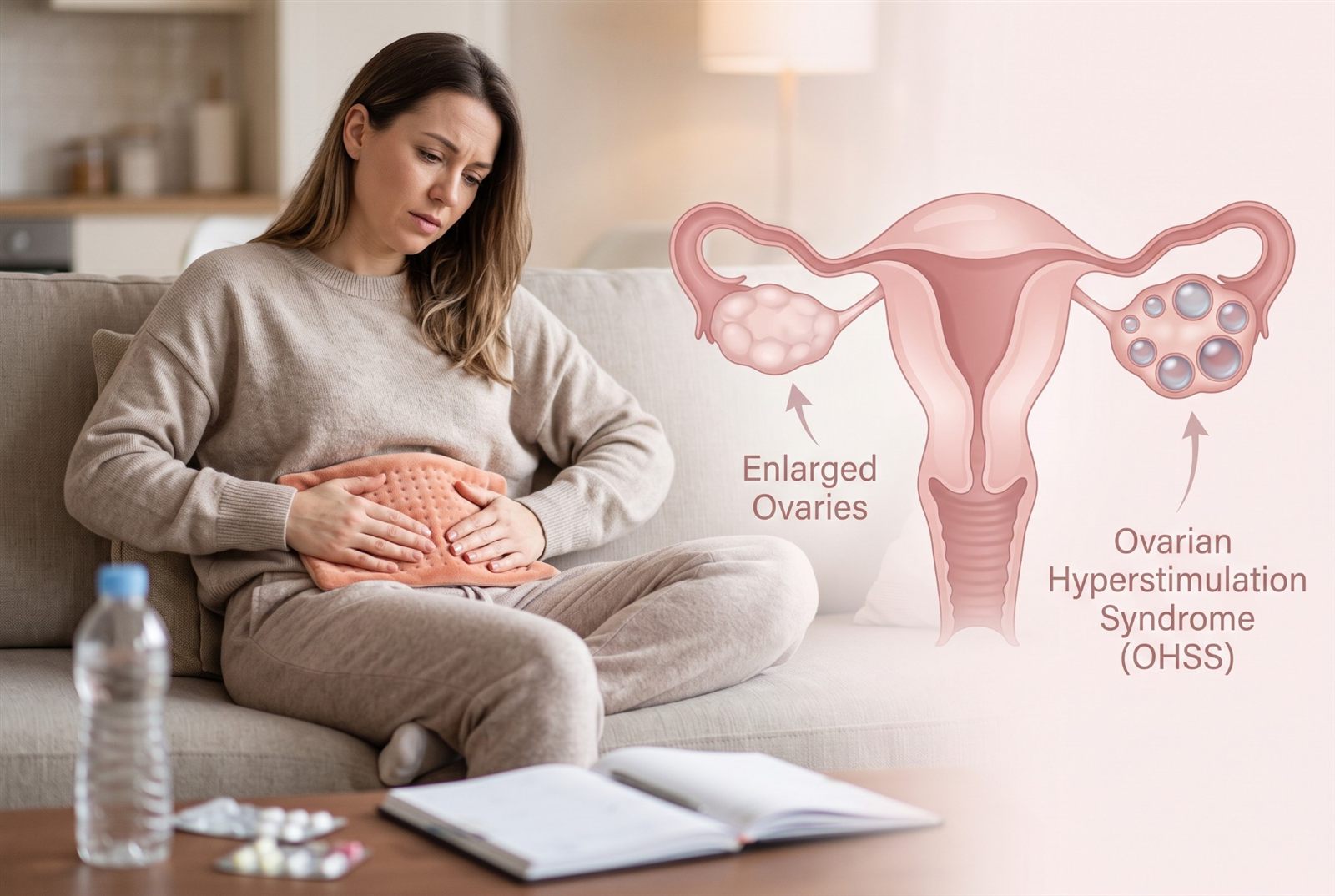
Going through IVF means asking your body to do a lot of heavy lifting. During the stimulation phase, we use medications to encourage your ovaries to produce multiple eggs at once. While our goal is to maximize your chances of success, we also prioritize your safety above all else. One of the clinical risks associated with this phase is Ovarian Hyperstimulation Syndrome (OHSS).
Decades ago, OHSS was a frequent concern in IVF. Today, thanks to modern medicine and advanced protocols, significant OHSS is highly preventable and rare. Here is a clinical breakdown of what OHSS is, the symptoms to watch for, and how our clinic actively works to protect you.
What Is OHSS?
OHSS occurs when the ovaries overreact to the fertility hormones (specifically hCG) used to trigger ovulation. The ovaries swell and leak fluid into the abdomen and, in severe cases, the chest cavity. This fluid shift is what causes the hallmark symptoms of the condition.
Recognizing the Symptoms
OHSS symptoms typically begin a few days after your egg retrieval. We categorize these symptoms by severity:
- Mild to Moderate OHSS: This is the most common form. Symptoms include mild abdominal bloating, mild pelvic pain, nausea, and a sudden weight gain of about 3 to 5 pounds in a few days. We monitor this closely, but it usually resolves on its own once your next period begins.
- Severe OHSS: Though much less likely, severe OHSS requires more prompt medical attention. Symptoms include rapid weight gain (more than 5 pounds in 24 hours), worsening abdominal pain, persistent vomiting, decreased urination, and, rarely, shortness of breath.
Who Is at Risk?
Certain patients are naturally at a higher risk for developing OHSS. This includes individuals with Polycystic Ovary Syndrome (PCOS), those with a very high Anti-Müllerian Hormone (AMH) level, patients who are under 35, and those who develop a large number of follicles during their stimulation cycle. If you fall into any of these categories, your doctor will tailor your protocol from day one to reduce these risks.
Modern Prevention Protocols
Our philosophy is prevention first. If we see signs that your ovaries are responding too vigorously, we use several advanced clinical strategies:
- The Lupron Trigger: Traditionally, an hCG injection is used to trigger the final maturation of eggs. Because hCG is the primary culprit in worsening OHSS, we often swap it for a leuprolide acetate (Lupron) trigger. This significantly reduces the risk of OHSS while still effectively maturing your eggs.
- The “Freeze-All” Cycle: Pregnancy worsens OHSS because the developing embryo naturally produces its own hCG. To protect you, our standard recommendation is to freeze all your embryos and wait to perform a Frozen Embryo Transfer (FET) in a later cycle, giving your ovaries a month to fully recover and return to normal size.
- Medical Management: We may prescribe a medication such as cabergoline starting around the time of your retrieval. This drug can help reduce fluid leakage from the blood vessels in the ovaries.
Your safety is our top priority. By using personalized medication doses, close ultrasound monitoring, and modern trigger protocols, we work to make your IVF journey as safe as it is successful.
You Are Not Alone. Our team is ready to help you!
We will assist you in every possible way to have a positive and successful experience as you proceed along your reproductive journey. Whether you desire a second opinion, or this is your very first visit to a fertility center, you can get started by scheduling an appointment today!

Request Your Appointment!
What our patients are saying

Dr. Qasim and his team are the best. They are very sensitive to their patients' feelings and problems. They helped me throughout the entire process and gave me so much strength when I needed it. My husband and I are currently 12 weeks pregnant, and we are the happiest. Dr. Qasim, thank you so much. May God bless you always.
Grecia C.
We can't express enough how grateful we are for the support and expertise we received from Dr. Rahul Sachdev and his team along our nurse Victoria from the very first consultation he and the team made us feel understood and cared for. They guided us through each step of the process with compassion and professionalism always taking the time to answer our questions and address my concerns.
Navi S.
5 weeks ago I delivered my IVF baby. I can't thank Dr. Sachdev enough for his knowledge and being straight forward with everything. The team was great as well. Thank you for my blessing 💕
Jennifer M.

Edison, NJ
CENTER FOR ADVANCED REPRODUCTIVE MEDICINE & FERTILITY
4 Ethel Rd, Edison, NJ 08817
Princeton, NJ
CENTER FOR ADVANCED REPRODUCTIVE MEDICINE & FERTILITY
114 Stanhope St, Princeton, NJ 08540
Cranford, NJ
CENTER FOR ADVANCED REPRODUCTIVE MEDICINE & FERTILITY
123 N Union Ave #102, Cranford, NJ 07016