Reproductive Immunology: Exploring Intralipids, Steroids, and Blood Thinners for Recurrent Implantation Failure
Experiencing a failed embryo transfer is heartbreaking. When it happens repeatedly—especially with high-quality, genetically tested (PGT-A normal) embryos—it is clinically referred to as Recurrent Implantation Failure (RIF). When we know the embryo is healthy and the uterine anatomy is clear, we have to look deeper. Often, the answer lies within the body’s immune system.
Reproductive immunology is a highly specialized field of fertility medicine that investigates how the maternal immune system interacts with a developing embryo. Here is a look at how we use advanced immune protocols to help our patients finally achieve a healthy pregnancy.
The Immune System’s Role in Pregnancy
Normally, your immune system is programmed to attack foreign invaders like viruses or bacteria. Because an embryo shares 50% of its DNA with the sperm provider, it is technically “foreign” to the patient’s body. In a typical pregnancy, the immune system naturally suppresses itself to welcome and protect the embryo. However, for some patients with autoimmune conditions or overactive immune responses, the body mistakenly identifies the embryo as a threat and interferes with its implantation.
Targeted Treatments for Immune Factors
When we suspect immunological issues, we can add specific medications to your Frozen Embryo Transfer (FET) protocol to create a calm, receptive uterine environment. These treatments include:
1. Corticosteroids (Prednisone) for Inflammation
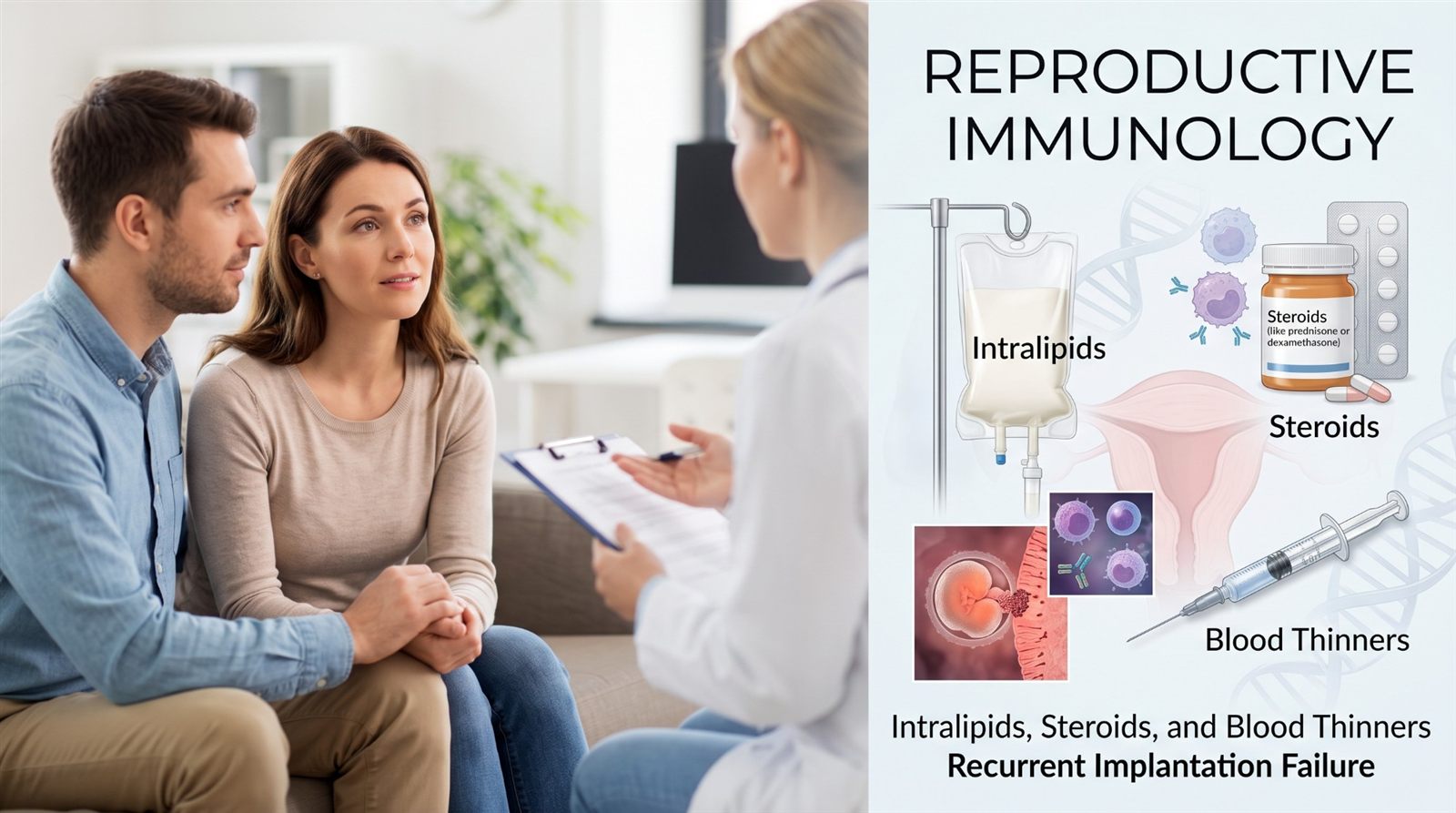
Systemic inflammation is a major barrier to successful implantation. Corticosteroids, such as prednisone, Medrol, or dexamethasone, are potent anti-inflammatory medications. By prescribing a low dose of steroids leading up to your transfer, we can significantly reduce uterine inflammation and suppress an overactive immune response. This helps keep the endometrial lining soft, receptive, and welcoming to the embryo.
2. Blood Thinners (Lovenox) for Micro-Clotting
Implantation relies heavily on a robust, healthy network of tiny blood vessels in the uterine lining. Some patients have undiagnosed blood clotting disorders (thrombophilias), such as Factor V Leiden or antiphospholipid syndrome (APS). These conditions can cause microscopic blood clots in the uterine lining, starving the embryo of the vital blood flow it needs to attach and grow. To combat this, we use anticoagulant injections, such as Lovenox (enoxaparin) or heparin, often paired with baby aspirin. These blood thinners keep circulation to the uterus optimal and prevent these harmful micro-clots from forming.
3. Intralipid Infusions to Calm NK Cells – More Controversial
Natural Killer (NK) cells are white blood cells that play a crucial role in fighting off disease. However, past literature has theorized that elevated levels of aggressive NK cells in the uterus can attack an implanting embryo. Intralipids are a sterile, intravenous (IV) blend of soybean oil, egg yolk, and glycerin. Previous studies have suggested that when infused into the bloodstream before and after a transfer, intralipids can suppress the toxicity of NK cells, effectively telling the immune system to stand down and allow the embryo to implant safely. While the current data and standard of care are neither conclusive nor fully understood, there may be instances where this strategy can play a role, specifically if all other interventions have failed.
Personalizing Your Protocol
Reproductive immunology is not a “one-size-fits-all” approach. If you have experienced recurrent implantation failure, unexplained infertility, or have a history of autoimmune diseases (such as Hashimoto’s thyroiditis, lupus, or rheumatoid arthritis), our clinical team will work with you to determine if an immune protocol is the missing piece of your puzzle.
Though an immune protocol adds a few extra steps and medications to your transfer cycle, for select patients it may be the key that finally unlocks the path toward a successful, healthy pregnancy.
You Are Not Alone. Our team is ready to help you!
We will assist you in every possible way to have a positive and successful experience as you proceed along your reproductive journey. Whether you desire a second opinion, or this is your very first visit to a fertility center, you can get started by scheduling an appointment today!

Request Your Appointment!
What our patients are saying

Dr. Qasim and his team are the best. They are very sensitive to their patients' feelings and problems. They helped me throughout the entire process and gave me so much strength when I needed it. My husband and I are currently 12 weeks pregnant, and we are the happiest. Dr. Qasim, thank you so much. May God bless you always.
Grecia C.
We can't express enough how grateful we are for the support and expertise we received from Dr. Rahul Sachdev and his team along our nurse Victoria from the very first consultation he and the team made us feel understood and cared for. They guided us through each step of the process with compassion and professionalism always taking the time to answer our questions and address my concerns.
Navi S.
5 weeks ago I delivered my IVF baby. I can't thank Dr. Sachdev enough for his knowledge and being straight forward with everything. The team was great as well. Thank you for my blessing 💕
Jennifer M.

Edison, NJ
CENTER FOR ADVANCED REPRODUCTIVE MEDICINE & FERTILITY
4 Ethel Rd, Edison, NJ 08817
Princeton, NJ
CENTER FOR ADVANCED REPRODUCTIVE MEDICINE & FERTILITY
114 Stanhope St, Princeton, NJ 08540
Cranford, NJ
CENTER FOR ADVANCED REPRODUCTIVE MEDICINE & FERTILITY
123 N Union Ave #102, Cranford, NJ 07016